1. Eliminate "Vampire Power" with Smart Plugs 🔌
Did you know that appliances like TVs, coffee machines, microwaves, and gaming consoles consume power even when they are turned off? This is known as Standby Power or "Phantom Load."
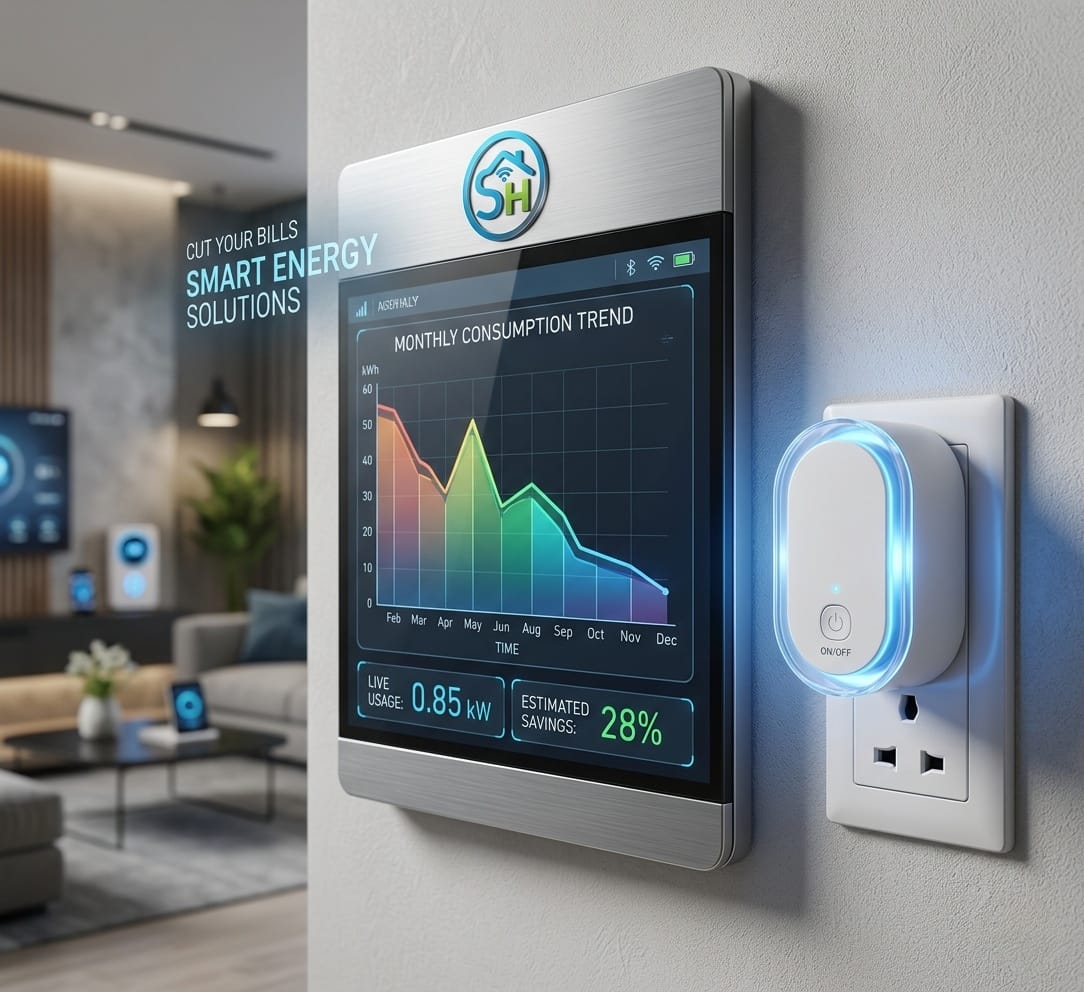
- How do Smart Plugs solve this? Instead of leaving devices connected to a live outlet 24/7, a Smart Plug automatically cuts the physical flow of electricity during hours you don't use them (like when you're sleeping or at work).
- The Impact: By scheduling heavy-duty appliances to "hard-off" via software, you protect your electronics from power surges and reduce your bill by up to 10% with zero effort.
2. Lighting That "Sees" You: Motion Sensors 💡
Leaving lights on in hallways, bathrooms, or kitchens is the leading cause of wasted electricity in modern homes.
- The Smart Solution: Instead of relying on memory, we rely on Motion Sensors. The moment you leave a room, the sensors detect the lack of movement and switch off the lights instantly.
- Why is it effective? It is perfect for zones we frequently forget (like storage rooms, guest bathrooms, or entryways). It ensures that lighting only operates when there is a genuine need, extending the lifespan of your bulbs and cutting immediate consumption.
3. Engineering AC & Water Heaters: Smart Scheduling 🌡️
Air conditioners in the summer and water heaters in the winter are the true "utility bill monsters." Manual control—simply turning them on and off—is often imprecise and expensive.
- Smart Water Heater Control: Instead of leaving the heater running all day just to maintain water temperature (a massive and constant drain), you can program it to activate only 30 minutes before you wake up or return home.
- Smart AC Management: Using temperature and humidity sensors, your smart system can automatically adjust the AC (e.g., raising the temperature from 22°C to 24°C at dawn) or shut it down immediately if a window is detected as open.
Tech in Service of Your Budget
Transitioning to a smart home with Smart Home Hub isn't just about keeping up with the times; it’s a calculated financial decision. You aren't just buying "gadgets"; you are buying a system that monitors, thinks, and saves on your behalf.
Investing in simple smart components today means lower utility bills for years to come.